
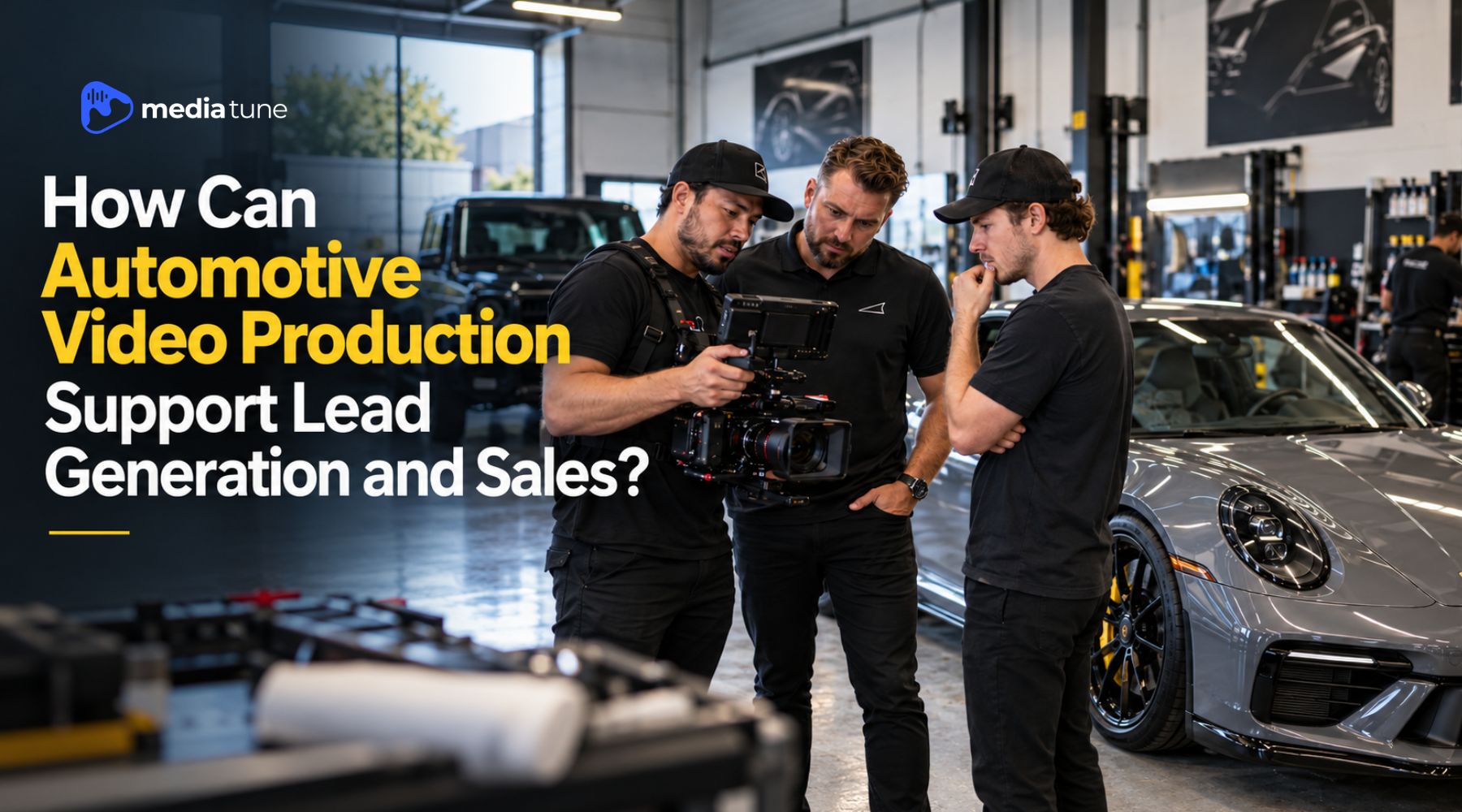
A production team reviews automotive footage created to support advertising, website content, lead generation, and sales.Automotive video production can support lead generation and sales when every video has a specific business job: earn attention, show the work, answer an objection, build trust, or move a prospect toward a call, quote request, booking, or consultation.
For an automotive detailing, tint, PPF, coating, wrap, or vehicle electronics business, the value is not simply polished footage. The value comes from turning real services and proof into reusable content for ads, social media, landing pages, website pages, and sales follow-up.
Video does not guarantee leads by itself. The offer, audience, distribution, landing page, follow-up, and conversion tracking still determine whether attention becomes a real opportunity.
Polished footage is only useful when it supports a clear business goal. Media Tune can help connect your creative, advertising, website pages, follow-up path, and lead tracking so each video has a stronger job than simply looking good.

Why Automotive Video Works Best When It Has a Business Goal
The first question should not be, “What should we film?”
It should be, “What should this video help the customer understand or do next?”
A shop may need a short video that gets a cold prospect to stop scrolling. Another piece may need to explain why full-front PPF costs more than a partial package. A website video may need to show how a coating appointment works. A follow-up clip may need to help a hesitant prospect understand what is included before they book.
Those are different jobs, so they should not all use the same script, length, or call to action.
- Who the video is for
- Which service or offer it supports
- What question or objection it needs to address
- Where the video will be used
- What action should be measured afterward
That keeps production tied to the customer journey instead of creating content simply because video looks impressive.
A finished automotive video should make that strategy visible. The creative, pacing, footage, and message should all support a specific purpose rather than simply showcasing the vehicle or service.
The video below is an example of how automotive footage can be presented as a focused piece of content rather than a collection of unrelated shots. When planning similar content, the important question is not only how the video looks, but also where it will be used, what message it supports, and what the viewer should do next.
Watch the example video:Use Video to Show the Proof Customers Cannot Get From a Service List
High-value automotive services can be difficult to judge from a few lines of website copy.
A customer comparing paint protection film may want to see panel coverage, edge work, or the finish after installation. Someone considering ceramic coating may want to understand preparation, paint correction, gloss, or maintenance expectations. A window tint shopper may care about appearance, visibility, film options, and what a professional installation looks like. A car audio customer may want to see integration quality without seeing a dashboard full of exposed wiring.
Video can make those details easier to understand.
- Preparation and installation steps
- Close-up finish details
- Before-and-after comparisons when the conditions are fair and clearly explained
- Technician explanations
- Vehicle walkarounds
- Customer-approved project recaps
- Service-specific FAQs
- Facility, team, and process footage
The important part is accuracy. Do not stage a dramatic “before and after” that exaggerates the result, and do not make product-performance claims that the manufacturer or business cannot support.
For expensive services, honest process footage can qualify prospects before they contact the shop. The customer gets a clearer picture of what they are paying for, and the sales conversation can start at a better level.
One Video Shoot Should Create More Than One Asset
A common production mistake is treating a shoot as one finished video.
For most automotive businesses, the better approach is to plan a content library.
A single well-planned shoot can capture a main service video, several short-form clips, vertical ad variations, website footage, still frames, technician sound bites, frequently asked questions, and follow-up content for leads who have not booked yet. The exact deliverables depend on the campaign, but the planning should happen before the camera starts rolling.
That means the shot list needs to account for different uses.
A wide horizontal shot may work well on a website. A vertical close-up may be better for Reels or Shorts. A short technician explanation may work as a standalone social post, while the same explanation can be edited into a longer service video.
Media Tune's public process describes this same planning mindset: the creative team develops scripts, plans the video shoot, and produces content before campaigns are built. The useful part is not simply having more files. It is having the right creative for the places where prospects will actually see it.
Video Can Strengthen Paid Advertising When the Creative Matches the Campaign
Paid media gives video a clear job because the campaign has an audience, objective, budget, and measurable action.
Google Ads currently supports video campaigns designed to drive conversions as well as campaigns focused on reach or views. That distinction matters. A video built for awareness may be judged by reach and engagement, while a conversion-focused campaign should be evaluated against actions such as calls, forms, bookings, or other tracked outcomes.
Meta advertising works the same way at a strategic level: the creative needs to fit the placement, audience, offer, and next step.
- A fast service transformation
- A clear problem-and-solution explanation
- A technician answering one common objection
- A project walkthrough with a direct offer
- A short comparison between service options
- A proof-focused retargeting video for people who already visited the website
The best-looking video is not automatically the best-performing ad. Paid creative has to communicate quickly, match the offer, and give the viewer a clear reason to act.
That is why video production and paid advertising strategy should be planned together instead of treated as separate projects. Media Tune's paid advertising approach focuses on targeted Google and Meta campaigns, conversion tracking, and measurable lead generation. For a deeper look at lead quality, see how paid advertising helps businesses generate qualified leads .
Put Video Where High-Intent Prospects Are Making Decisions
Social media is only one place to use video.
A service page or landing page can use the right video to answer questions that would otherwise require several paragraphs. The key is placement. A visitor on a PPF page does not need a generic brand montage before they understand the package. They may benefit more from a short clip that shows coverage, process, finish, or the difference between options.
Video can support:
- Service pages
- Dedicated landing pages
- Quote or consultation pages
- Remarketing campaigns
- Email or SMS follow-up
- Sales presentations
- Proposal follow-up
- Social media
- YouTube
- Google and Meta advertising
The page still has to convert without forcing the visitor to watch. Important service details, pricing guidance when appropriate, trust information, and calls to action should remain available in text.
This also matters for search and AI visibility. Google Search Central says the same SEO fundamentals apply to AI features such as AI Overviews and AI Mode, and it recommends keeping important information available in textual form while supporting that content with useful images and video when appropriate.
In practice, that means video should strengthen a useful page, not replace the information search engines and customers need to read.
Media Tune's conversion-focused website and landing-page approach also emphasizes clear calls to action, lead forms, tracking, and a page experience built around measurable actions.
A strong video should do more than look polished. It should help the right prospect understand the service, trust the process, compare options, and know what to do next. Media Tune can help plan video content around the offer, landing page, follow-up path, and measurable lead action.
Build content for the places prospects actually see it.
Use Video as Sales Enablement, Not Just Marketing Content
A lead does not stop needing information after filling out a form.
Video can give the sales team useful material to send during follow-up. Instead of answering the same question from scratch, a representative can share a short service explainer, project example, process walkthrough, or "what happens next" video that matches the prospect's concern.
For example, a PPF lead who is unsure about coverage can receive a visual explanation of the package. A ceramic coating prospect who is comparing price can receive a process-focused video showing the preparation involved. A customer waiting on an estimate can receive a short overview of what the appointment includes.
This does not replace a real conversation. It makes the conversation easier.
Good sales-enablement video should be easy to find, specific enough to be useful, and short enough that the prospect will actually watch it. The goal is to reduce confusion and help the sales team move the right lead toward a decision.
Measure Leads and Sales Actions, Not Just Views
Views can tell you whether a video was watched. They do not tell you whether the video helped produce revenue.
A lead-generation video program needs a measurement plan before launch.
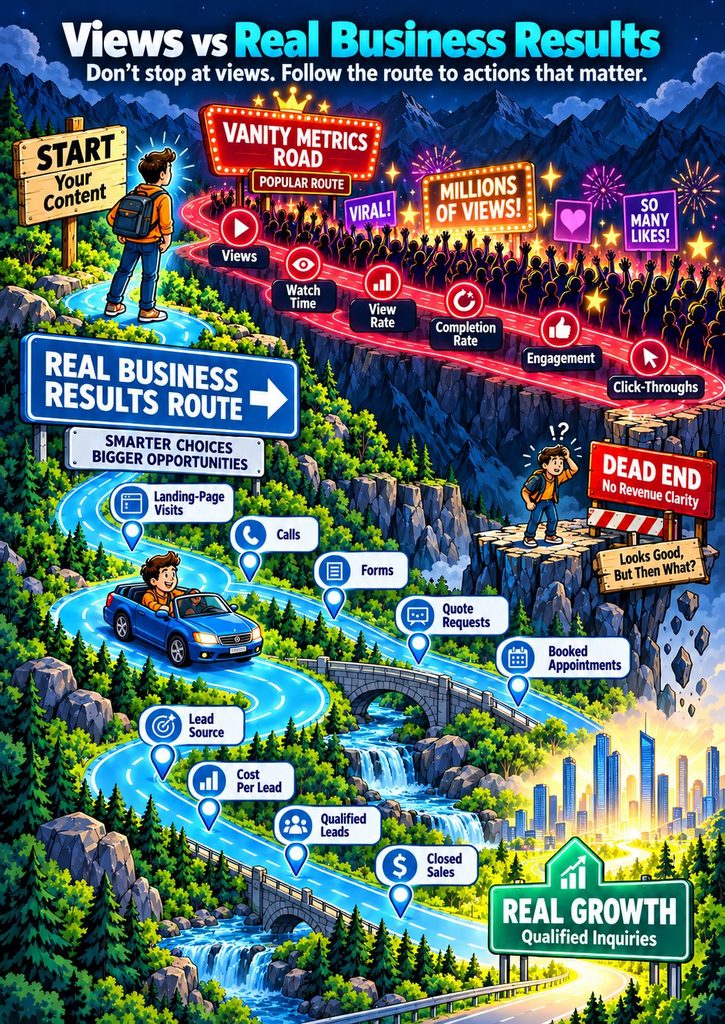
Video performance should be measured beyond views by tracking actions such as calls, forms, qualified leads, appointments, and sales.Useful business-level measurements can include:
- Landing-page visits from the campaign
- Calls
- Form submissions
- Quote requests
- Booked consultations or appointments
- Lead source
- Cost per lead for paid campaigns
- Qualified lead rate when the CRM can support it
- Booked-job or closed-sale data when attribution is available
Platform metrics still matter. Watch time, view rate, completion rate, engagement, and click-through behavior can help diagnose whether the creative is holding attention. But those metrics should be read in context.
A video with fewer views can still be more valuable if it reaches the right audience and contributes to more qualified inquiries. A high-view video may be useful for awareness but weak as a direct lead generator. The measurement question should match the video's job.
What Should an Automotive Video Production Plan Include?
Before the shoot, the business should be able to answer a short set of questions.
- Which service are we promoting?
- Who is the customer?
- What do they already know?
- What is stopping them from taking the next step?
- What proof can we show honestly?
- What format do we need for the website, ads, and social channels?
- What is the call to action?
- Where will the viewer land after clicking?
- How will calls, forms, bookings, or sales opportunities be tracked?
- Which clips can be reused later?
If those answers are unclear, the production brief is not ready.
This is also where automotive-specific knowledge matters. A generic production plan may create attractive footage without capturing the details customers actually compare: film coverage, prep work, installation quality, finish, vehicle integration, service packages, maintenance, or the difference between options.
The footage should support the sales conversation the business is already having.
How Media Tune Connects Video With the Rest of the Marketing System
Media Tune positions itself as a marketing partner for automotive and marine aftermarket businesses, and its public process includes scripting, video-shoot planning, and content production before campaign buildout.
That connection matters.
Video works best when it is planned alongside the ad strategy, website, landing page, follow-up path, and measurement setup. A shop does not need another folder full of clips with no clear purpose. It needs creative that can support the moments where a prospect discovers the business, evaluates the service, compares options, and decides whether to contact the shop.
Media Tune's public service mix currently centers on paid advertising, SEO and GEO, and website development. For MT-0006, the safest way to think about automotive video production is as a creative capability that supports those growth systems, not as a promise that video alone will generate sales.
If your business is investing in video but cannot clearly explain which audience, offer, page, campaign, or sales step each piece supports, the strategy needs more definition before the next shoot.
The right automotive video should support more than attention. It should help prospects understand the service, trust the process, compare their options, and take the next step. Media Tune can help plan video content that connects creative, website pages, paid campaigns, follow-up, and lead tracking.
FAQs About Business Website Conversion
The best type depends on the buying question. Process videos, service explainers, project walkthroughs, technician answers, customer-approved case studies, and short proof-focused ads can all support lead generation when they are tied to a relevant offer and clear next step.
Usually both, but the edit should fit the placement. Short vertical clips can work well for social and ad placements, while website videos can explain a service, show proof, or reduce uncertainty near a conversion point. Important information should still be available in text.
Track the action the video is supposed to influence. That can include landing-page visits, calls, form submissions, quote requests, appointments, qualified leads, or closed jobs when attribution is available. Views and watch time are useful diagnostic metrics, but they are not the same as leads.
Yes, if the shoot is planned for reuse. Capture horizontal and vertical compositions, clean process footage, short explanations, close-ups, and multiple hooks so the footage can be edited for websites, Reels, Shorts, ads, and sales follow-up.
No. Production quality can improve presentation and credibility, but sales results still depend on the audience, offer, message, distribution, landing experience, follow-up, pricing, and tracking. Video should support that system rather than be treated as a guarantee.