

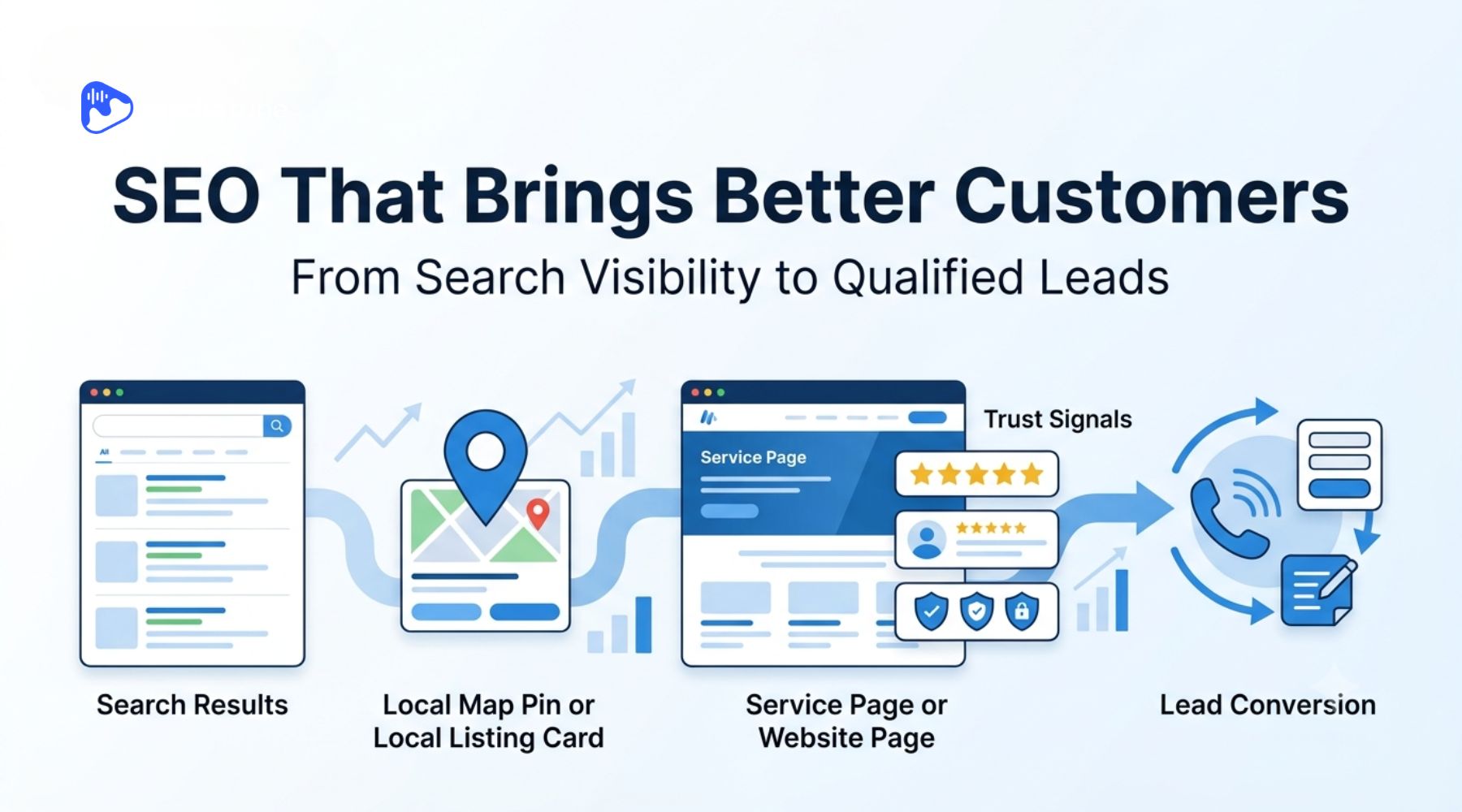
More website traffic does not always mean better business.
A shop can get more impressions, more clicks, and more visitors and still feel like the phone is not ringing enough. Sometimes the problem is not visibility. The problem is that the visibility is too broad, too weak, or pointed at people who were never the right fit in the first place.
SEO can help businesses get found by better customers when the strategy is built around real service intent. That means the website is not just trying to rank for anything related to the industry. It is helping the right person find the right service page, understand the business, trust the offer, and take the next step.
For Media Tune, that is the difference between SEO activity and SEO for business growth. Rankings matter, but rankings alone are not the finish line. The better goal is qualified visibility that supports calls, forms, quote requests, booked appointments, and long-term organic lead generation.
SEO Should Help the Right Customers Find the Right Service
A better customer is not just anyone who lands on the website.
For an automotive, window film, or marine protection business, a better customer usually has a specific need. They might be looking for ceramic coating, paint protection film, window tint, marine detailing, vehicle electronics, architectural film, or another service the business actually wants to sell. They are also in the right market, have a realistic expectation, and are close enough to taking action.
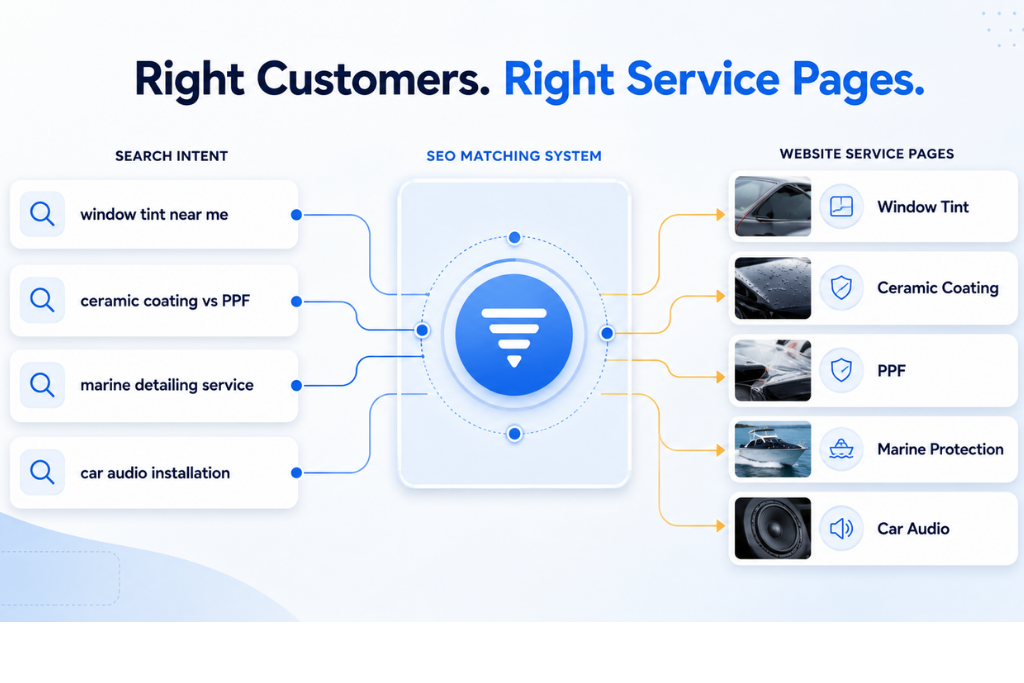
That is what SEO should support. The strategy should help connect high-intent searches with the pages that answer those searches clearly.
For example, a person searching for “window tint near me” may need a different page than someone searching for “ceramic coating vs PPF.” One search is more local and action-driven. The other is more comparison-driven. Both can matter, but they need different content, different calls to action, and different internal links.
Good SEO does not treat every visitor the same. It helps the business meet the customer at the right stage.
Your SEO should help the right people find the right services and take the next step. If your site is getting traffic but not enough serious inquiries, the strategy may need a clearer path from search to lead.

What Makes SEO Different From Random Website Traffic?
Random traffic can make a report look busy.
But busy is not the same as effective. A page can attract people who are only researching, outside the service area, looking for a free answer, or comparing services the business does not offer. That traffic may increase sessions without doing much for revenue.
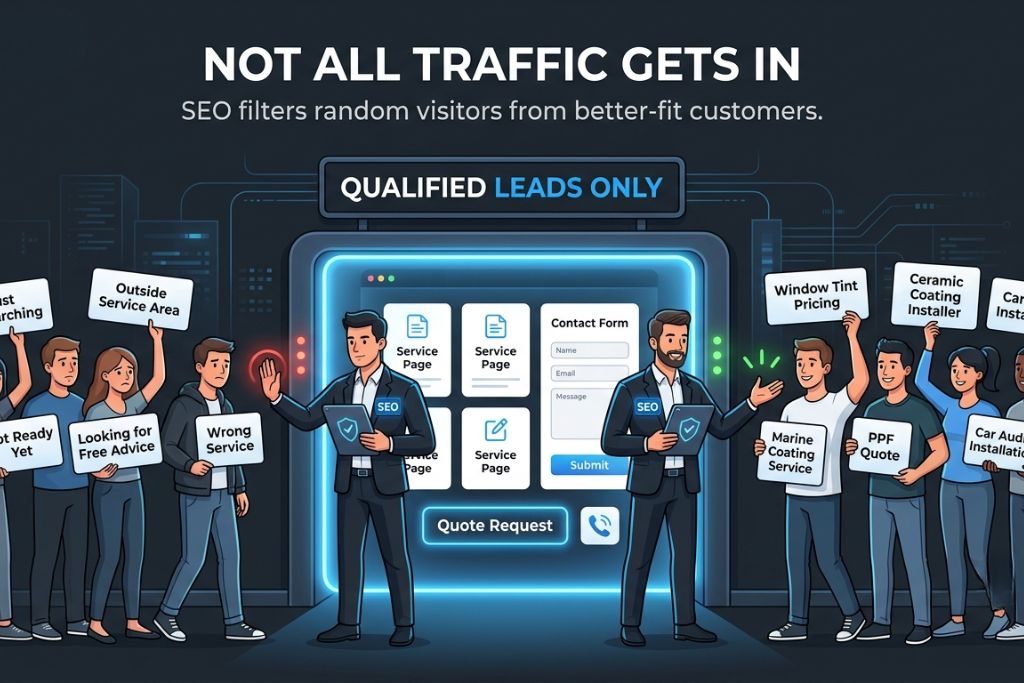
SEO is stronger when it is built around customer fit. That starts with understanding which services matter most, which locations matter, which questions customers ask before they call, and what proof they need before they trust the business.
A tint shop does not need every person searching for “car windows.” It needs drivers looking for tint, heat rejection, privacy, UV protection, local installation, or pricing guidance in the market it serves. A marine protection company does not need generic boat traffic. It needs boat owners who are researching coating, detailing, maintenance, or protection services that match what the business provides.
That is where the strategy gets more useful. SEO becomes less about chasing traffic and more about guiding better-fit customers toward the right next step.
SEO Connects Service Demand With the Right Pages
Service pages do a lot of the heavy lifting in SEO.
When someone searches for a specific service, Google needs to understand which page on the website best answers that search. The customer needs the same thing. They should be able to land on a page and quickly understand what the business offers, who it serves, where it works, and why it is worth contacting.
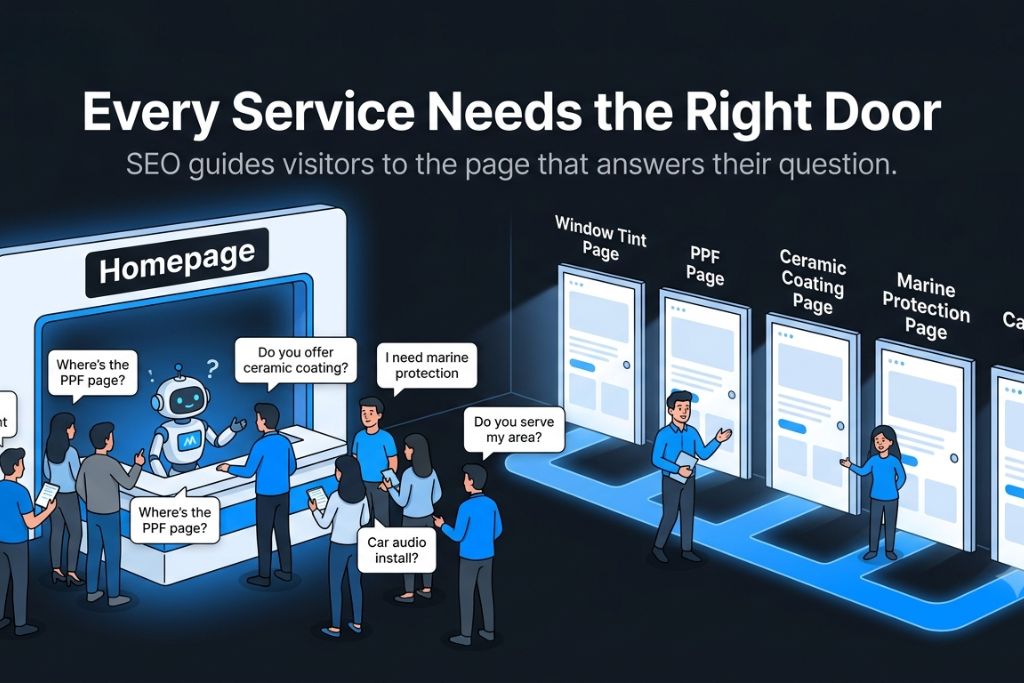
This is why a general homepage is not enough for most service businesses. The homepage can explain the brand, but service intent usually needs a focused page.
For a shop that offers multiple services, that may mean separate pages for window tint, PPF, ceramic coating, auto detailing, vinyl wraps, marine protection, car audio, lighting, security, or architectural film. Each page should be built around the way customers actually search and decide.
Service pages should answer the customer’s real question
A customer does not land on a service page just to admire the layout. They are trying to answer practical questions.
Can this business help me? Do they offer the exact service I need? Do they understand my type of vehicle, boat, building, or project? Do they serve my area? Do they look trustworthy? What should I do next?
That is why service page SEO and conversion strategy have to work together. The page should be easy for search engines to understand, but it also has to be useful for the person reading it.
A strong SEO page explains the service in plain language, answers common objections, uses clear headings, includes local or industry context, and gives the visitor a simple next step. That is how search visibility starts turning into real conversations.
Local SEO Helps Nearby Customers Trust the Business Before They Call
Local SEO matters because most service businesses depend on customers in a real market.
Someone looking for PPF, window tint, detailing, car audio, or marine coating usually wants a provider they can actually visit or contact. They may compare several local companies before calling. They may check reviews, photos, location details, service pages, and Google Business Profile information before they decide who feels like the best fit.
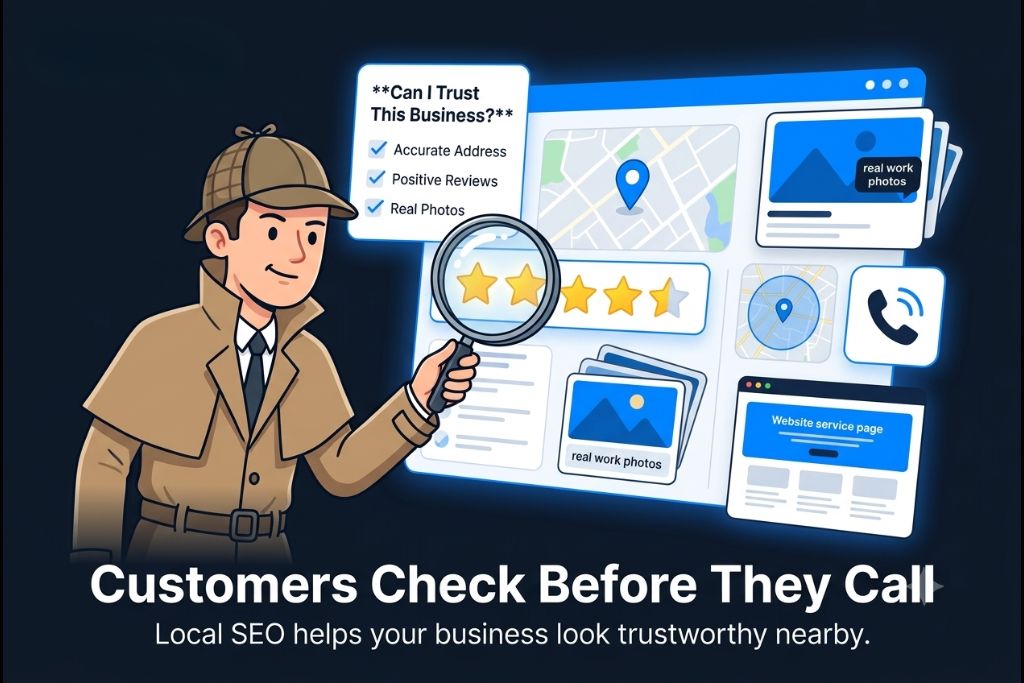
That means local SEO is not only about showing up on a map. It is about helping the business look relevant and trustworthy when nearby customers are actively comparing options.
A stronger local SEO foundation can include service-area clarity, optimized website pages, location-aware content, accurate business information, review signals, Google Business Profile support, and pages that match local search intent.
For Media Tune’s audience, this is especially important in competitive local markets. A window film shop, PPF installer, marine detailer, or vehicle electronics shop may be competing with several businesses that offer similar services. Local SEO helps the business show customers why it is relevant before the first phone call happens.
Keyword Strategy Helps Separate Buyers From Browsers
Not every keyword has the same value.
Some keywords show early research. Others show stronger buying intent. A person searching “what is ceramic coating” may still be learning. A person searching “ceramic coating installer near me” is probably closer to contacting a shop. Both searches can be useful, but they should not be treated the same.
That is why keyword strategy matters.
A smart keyword strategy looks at the type of search, the service behind it, the customer’s stage, and the page that should answer it. It also looks for gaps. Maybe the business has a strong service page but no supporting content. Maybe it has a blog article but no clear conversion path. Maybe it ranks for broad terms but not the local service terms that bring better inquiries.
For SEO for business growth, the goal is not to stuff keywords into pages. The goal is to understand how better customers search before they choose a provider.
Technical SEO Keeps Search Engines and Customers From Hitting Roadblocks
Technical SEO sounds more complicated than it needs to sound.
At a practical level, it asks a simple question: can search engines and customers use the website without running into avoidable problems?
If pages are hard to crawl, poorly structured, slow, not mobile-friendly, missing important internal links, or built with confusing navigation, the website can hold back the rest of the strategy. The same thing happens when contact forms do not work well, calls to action are buried, or service pages are difficult to find.
Technical SEO can include site structure, crawlability, indexation checks, mobile experience, page speed, schema markup, internal linking, broken link cleanup, and other improvements that help the website perform better.
The business owner does not need to know every technical detail. What matters is the outcome: fewer roadblocks between a customer search and a customer action.
Better visibility only helps if the website can turn visitors into calls, forms, and bookings. A strong SEO strategy should work with the site structure, page speed, service content, and conversion path.
SEO Content Builds Authority Around Real Customer Questions
Good SEO content should not be written just to fill a blog calendar.
It should answer the questions customers actually ask before they choose a service. For an automotive detailing business, that might mean explaining ceramic coating maintenance, PPF lifespan, window tint differences, or paint correction expectations. For a marine protection company, it might mean explaining coating care, oxidation, seasonal maintenance, or protection options for boat owners.
This content can support service pages by covering questions that are too specific or too early-stage for the main service page. It can also help the website build topical depth around the services that matter most.
The key is to keep the content tied to real customer decisions. A blog about “why window tint matters” should not be generic. It should explain comfort, privacy, glare, heat, film options, local climate concerns, and how the reader should think about choosing a provider.
That kind of content helps the business show up for more relevant searches and gives potential customers a reason to trust the site before they call.
SEO Works Better When the Website Is Built to Convert
Getting found is only part of the job.
Once the visitor lands on the website, the page has to help them act. If the page is confusing, slow, too thin, or missing a clear call to action, the business may lose the lead even if the SEO brought in the right person.
This is where SEO and website development need to work together.
A conversion-focused website should make the next step obvious. For service businesses, that may mean click-to-call buttons, quote forms, booking options, strong service descriptions, proof points, project examples, helpful FAQs, and a layout that works well on mobile.
A search-optimized page can bring the visitor in. A strong website experience helps turn that visit into a call, form, consultation, or quote request.
Reporting Shows Which Visibility Turns Into Leads
SEO should not live in a black box.
Business owners need to know what is happening. Which pages are gaining visibility? Which searches are bringing visitors in? Which pages are leading to calls, forms, or bookings? Which services are getting traction? Which areas still need support?
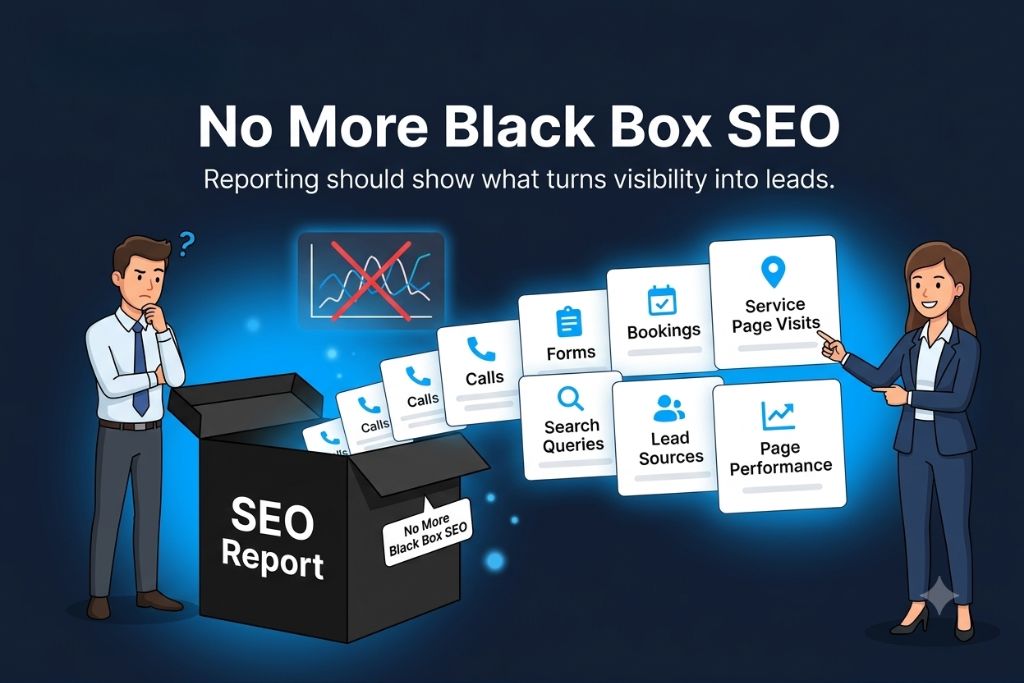
This is where reporting becomes part of the strategy, not just a monthly attachment.
Search Console can help show search queries, clicks, indexing issues, and page performance. Analytics can help show visitor behavior and conversion events. Call tracking, form tracking, and lead source reviews can connect the website activity to real business inquiries.
The point is not to drown the owner in data. The point is to understand whether SEO is helping attract better opportunities.
If a page gets traffic but no calls, the page may need stronger copy, a better offer, clearer trust signals, or a sharper call to action. If a service page brings fewer visitors but better leads, that page may be more valuable than a high-traffic article that never converts.
SEO and Paid Ads Should Work Together
SEO and paid ads should not fight each other.
They solve different parts of the same growth problem. Paid ads can create faster visibility for targeted services, offers, and locations. SEO builds long-term visibility through useful pages, stronger website structure, local signals, content, and authority.
A paid campaign can also teach the business what people respond to. If a specific service, location, offer, or landing page performs well in paid ads, that insight can shape future SEO content and service page priorities.
SEO can support paid ads too. When the website has stronger service pages, clearer content, and better conversion paths, paid traffic has a better place to land.
This is the same idea behind Media Tune’s broader approach: the campaign, the website, the content, the local visibility, and the reporting should support the same business goal.
Why SEO Fails to Bring Better Customers
SEO can underperform when the strategy is too generic.
Common problems include chasing broad keywords, publishing thin content, ignoring local intent, using service pages that do not explain the offer clearly, skipping technical fixes, or measuring success by rankings alone.
Another problem is content that sounds like it could belong to any business in any city. That does not help a shop stand out. A PPF installer, window tint shop, marine protection company, or vehicle electronics business needs content that reflects how customers actually compare those services.
A weak SEO strategy may bring traffic, but the business still ends up asking the same question: why are these visitors not turning into real leads?
Here is the issue. SEO has to be connected to the business model. It should know which services matter, which customers are valuable, which markets are competitive, and which actions count as success.
How Media Tune Looks at SEO for Business Growth
Media Tune looks at SEO as part of a larger lead-generation system.
That system includes service pages, local search visibility, technical website improvements, SEO content, Google Business Profile support, reporting, and a website that helps turn visitors into action. For automotive, window film, marine, and aftermarket businesses, those pieces need to work together because the customer journey is rarely one step.
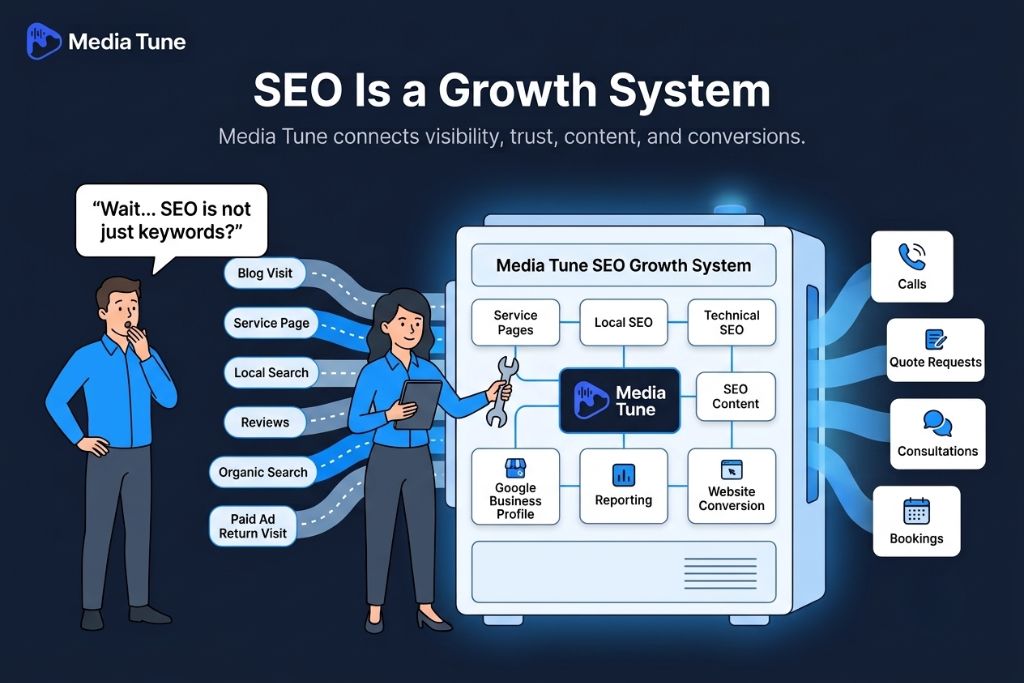
A customer might find a blog first, compare a service page next, check the Google Business Profile, read reviews, look at photos, and then call. Another customer might click an ad first, leave, and come back later through organic search. The strategy should support all of those paths.
For Media Tune, SEO is not just about getting pages indexed or adding keywords. It is about helping the business get found for the services that matter and making sure that visibility has a practical path toward calls, quote requests, consultations, and bookings.
If your business needs better local visibility, stronger service pages, and clearer tracking, Media Tune can help build a strategy around the customers you actually want to reach.
How Can SEO Help Businesses Get Found by Better Customers?
SEO helps businesses get found by better customers by aligning the website with how high-intent people search, compare, and decide.
That means building pages for real services, improving local search visibility, answering customer questions with useful content, removing technical roadblocks, strengthening the website experience, and tracking what turns into real leads.
The best SEO strategies are not built around traffic alone. They are built around the full path from search to contact.
When service pages, local SEO, keyword strategy, technical SEO, content, website conversion, and reporting work together, a business has a better chance of showing up for the people who are more likely to call, book, or request a quote.
FAQs About SEO and Qualified Leads
SEO helps business growth by making it easier for customers to find the business when they search for relevant services. For service-based businesses, the goal is not only more traffic. The goal is more qualified visibility that can support calls, forms, quote requests, and bookings.
Local SEO helps nearby customers find and compare a business when they search for services in their area. It can support better customer quality by connecting local intent with clear service pages, accurate business information, Google Business Profile visibility, and trust signals.
SEO traffic is the number of visitors coming from organic search. Qualified leads are the visitors who match the business’s target customer profile and take a meaningful action, such as calling, booking, or requesting a quote. A healthy SEO strategy should care about both visibility and lead quality.
SEO usually needs time because search engines have to crawl, understand, index, and evaluate updated pages. Some improvements can be noticed faster than others, but a business should usually judge SEO by steady progress over time, not one short reporting window.
SEO and paid advertising work differently. Paid ads can help a business gain faster visibility for specific searches or audiences. SEO builds long-term organic visibility through stronger pages, content, local signals, and website improvements. For many businesses, the stronger strategy uses both together.
A business can review organic search queries, page performance, calls, form submissions, quote requests, booking activity, and lead source data. The goal is to see which SEO pages and searches are producing real opportunities, not just visits.