

More leads do not always mean better business.
A company can get more clicks, more website visits, and more form submissions and still feel like the results are weak. That usually happens when the campaign is bringing in the wrong people. Some visitors are only researching. Some are outside the service area. Some are looking for the cheapest option. Some were never serious prospects in the first place.
Paid advertising can help businesses generate more qualified leads, but only when the campaign is built with the right goal in mind.
The goal is not just traffic.
The goal is to reach people who are more likely to call, book, request a quote, schedule a consultation, or take the next real step toward becoming a customer.
At Media Tune, we look at paid advertising as part of a bigger lead-generation system. The ad matters, but so does the landing page, the offer, the targeting, the tracking, and the follow-up. When those pieces work together, paid ads can help a business attract better opportunities instead of just more activity.
Paid Advertising Should Focus on Lead Quality, Not Just Traffic
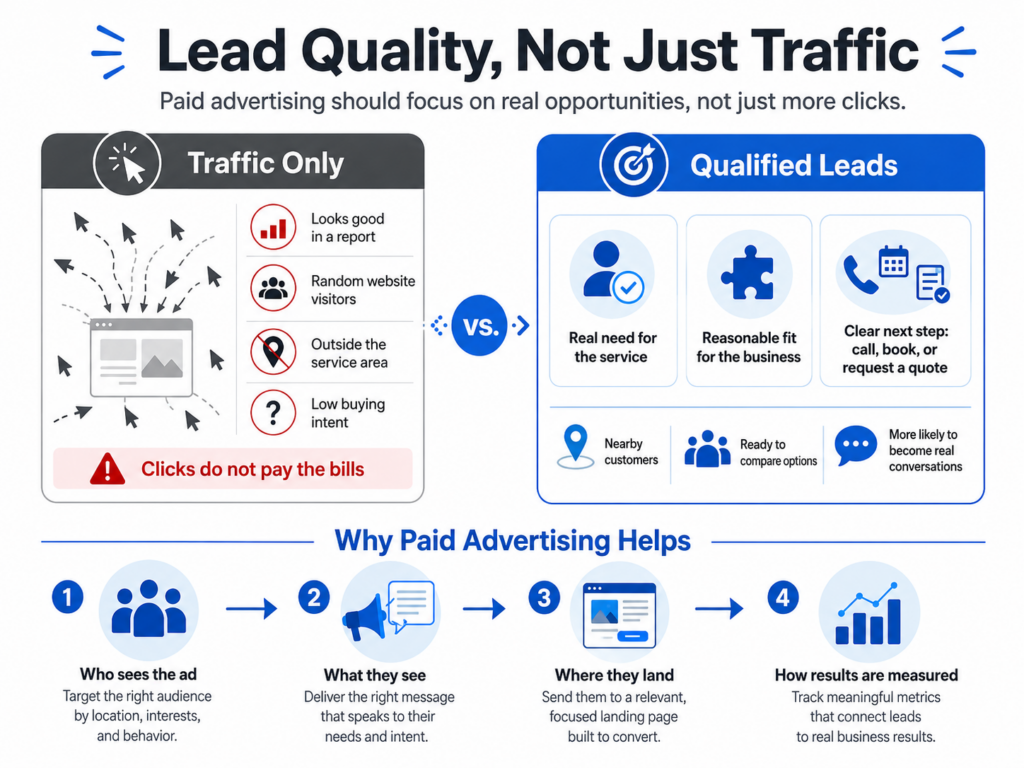
Clicks can look good in a report.
But clicks do not pay the bills by themselves.
A paid advertising campaign can bring hundreds of visitors to a website and still underperform if those visitors are not the right fit. That is why businesses should not judge paid ads by traffic alone. The better question is: are those clicks turning into real conversations?
A qualified lead usually has three things:
- A real need for the service
- A reasonable fit for the business
- A clear next step, such as calling, booking, or requesting a quote
For example, a local service company does not need random website traffic from people outside its service area. It needs nearby customers who are actively looking for the service and are ready to compare options or take action.
That is where paid advertising becomes useful. It gives the business more control over who sees the message, what they see, where they land, and how the campaign is measured.
Need Better Leads, Not Just More Clicks?
Paid ads should do more than send people to your website. They should help your business reach people who are more likely to call, book, or request a quote.
What Makes a Lead Qualified?
A qualified lead is not just anyone who fills out a form.
A qualified lead is someone who matches the type of customer the business actually wants. That may include their location, budget, service need, timeline, and level of interest. For some businesses, a qualified lead may be someone ready to book right away. For others, it may be someone requesting a detailed quote or consultation.
Here is a simple example.
If a business offers professional services in one city, a lead from another state may not be useful. If a company only handles commercial projects, residential inquiries may not be a good fit. If a shop sells premium services, bargain-only shoppers may take up time without turning into strong customers.
Paid advertising helps filter those gaps when the campaign is built correctly.
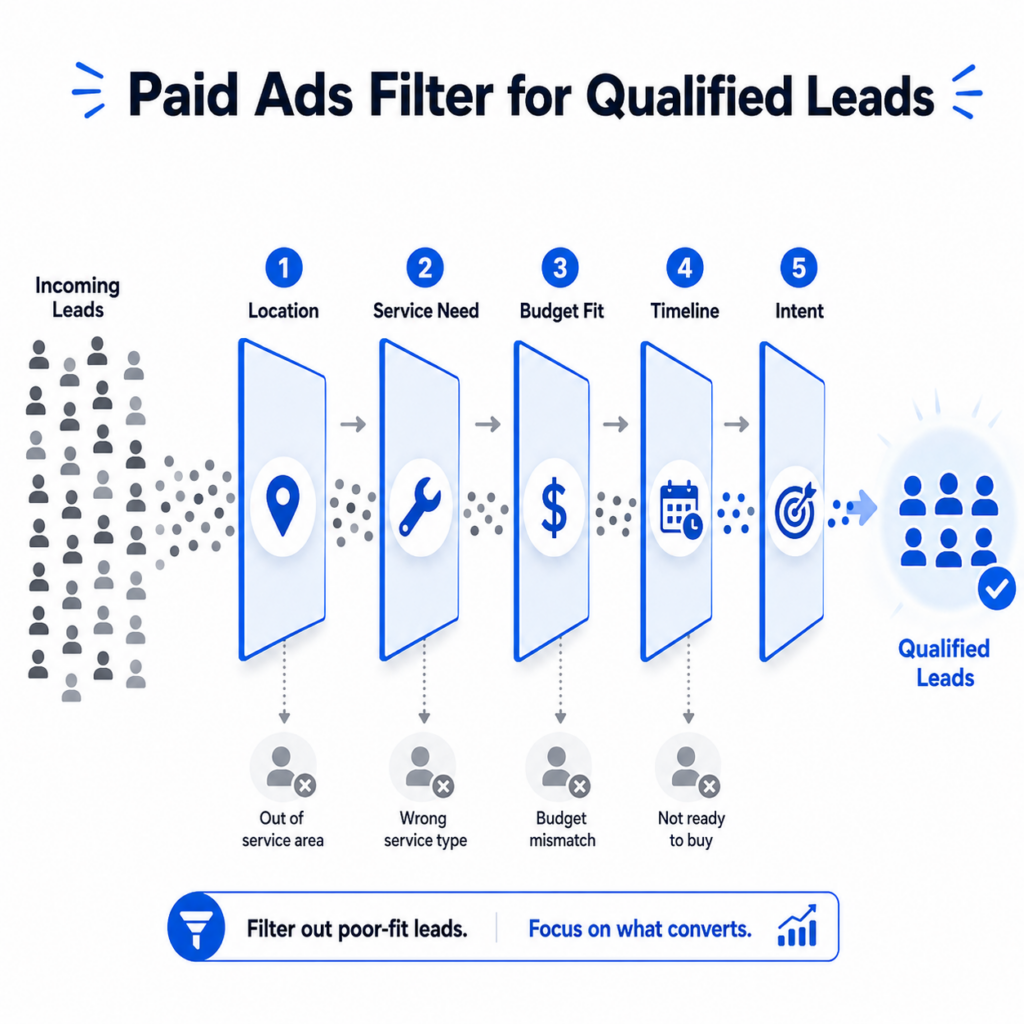
The campaign can target specific locations, search terms, audiences, devices, and service categories. It can also exclude poor-fit searches that waste budget. That filtering is one of the biggest differences between running ads for visibility and running ads for qualified lead generation.
Paid Ads Help Businesses Reach People With Buying Intent
Intent matters.
Someone searching “what is paid advertising” is probably still learning. Someone searching “paid advertising agency for small business” is closer to taking action. The difference between those searches matters because one is informational and the other shows stronger commercial intent.
Paid advertising can help businesses appear when people are already searching for a solution.
For local businesses, this often includes searches tied to:
- A specific service
- A location
- A quote request
- A problem that needs to be solved soon
- A comparison between providers
- A booking or consultation need
A person searching for “commercial window tint quote,” “emergency HVAC repair,” or “Google Ads management for small business” is not just browsing casually. They are showing signs that they need help and may be ready to contact someone.
That does not guarantee a sale. Nothing does.
But it puts the business in front of people who are much closer to making a decision.
Better Targeting Helps Reduce Wasted Ad Spend
Poor targeting drains budget fast.
A campaign may look active because people are clicking, but those clicks can come from the wrong location, wrong audience, or wrong type of search. That is why paid advertising needs more than a budget and a few keywords. It needs control.
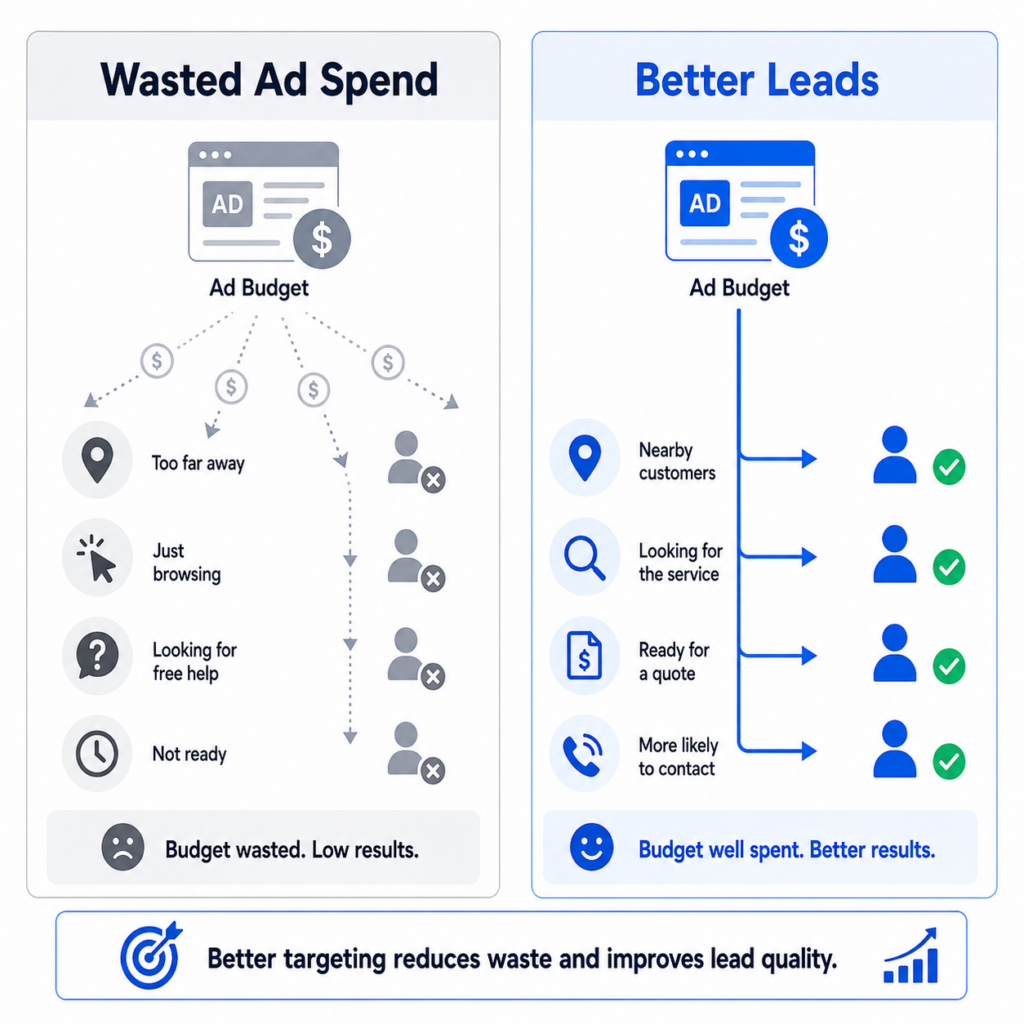
Strong targeting can help businesses filter by:
- Service area
- Search terms
- Audience behavior
- Device type
- Time of day
- Customer intent
- Past website visits
Negative keywords are especially useful. These are words or phrases that tell the ad platform when not to show an ad.
For example, a business that sells paid services may want to avoid searches that include “free,” “jobs,” “DIY,” or “training,” depending on the campaign. Without those exclusions, the business may pay for clicks from people who were never looking to hire anyone.
Good targeting does not make a campaign perfect.
But it helps reduce waste and keeps more of the budget focused on people who are more likely to become real leads.
Strong Ad Copy Attracts the Right Prospects
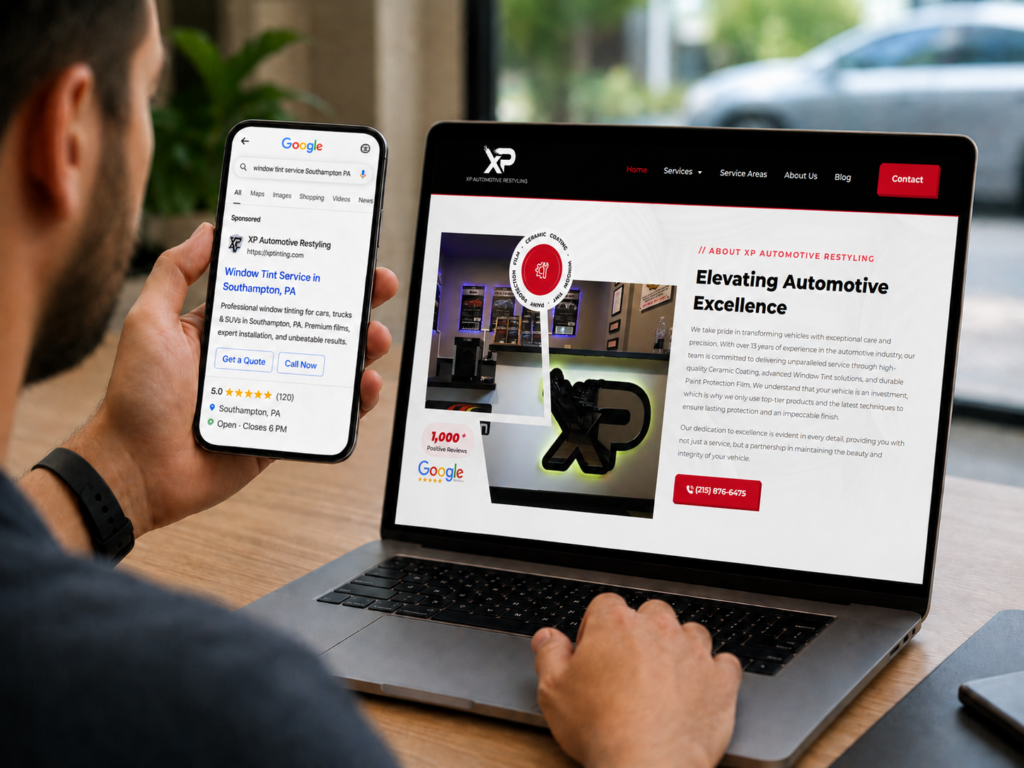
Ad copy should not just sound nice.
It should help the right person recognize that the business fits what they need.
A good ad usually makes the service clear, speaks to the customer’s problem, and gives them a reason to take action. A weak ad may be too broad, too vague, or too focused on getting any click possible.
That is a common mistake.
If the ad promises too much or speaks to everyone, it may attract people who are not a good match. Better ad copy is more specific. It should make the offer clear before the person clicks.
For example, a service business may mention:
- The exact service being promoted
- The location or service area
- A quote or consultation option
- A clear call to action
- A reason to trust the business
That kind of copy does not just chase attention. It helps qualify the visitor before they ever reach the website.
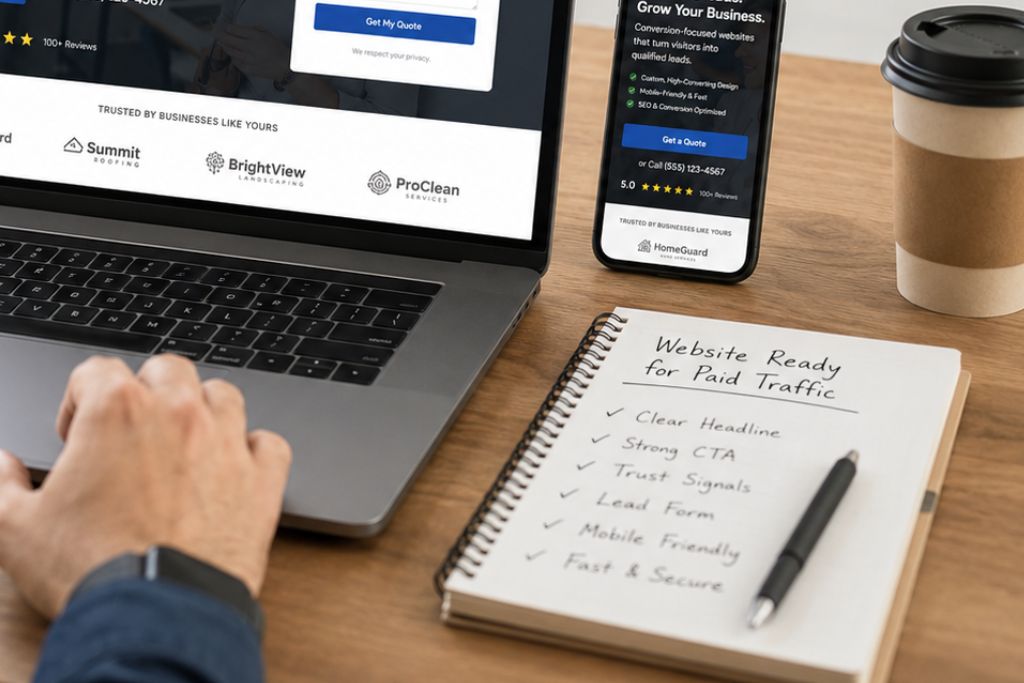
Is Your Website Ready for Paid Traffic?
Strong ads can bring visitors in, but the page they land on has to do its job. A focused landing page can make it easier for serious prospects to call, book, or request a quote.
The Landing Page Matters Just as Much as the Ad
A good ad can still fail if the landing page is weak.
This is one of the biggest problems we see with paid traffic. The campaign gets the visitor to click, but the website does not make the next step clear. Maybe the page loads slowly. Maybe the form is hard to find. Maybe the visitor lands on a general homepage and has to figure out where to go next.
That friction costs leads.
A strong paid advertising landing page should be focused on one main action. It should match the ad, explain the service, build trust, and make contacting the business easy.
A good landing page usually includes:
- A clear headline
- A direct explanation of the service
- Local or service-area details
- Reviews, project examples, or trust signals
- A simple form
- A click-to-call button
- A clear call to action
- Fast loading speed
- A layout that works well on mobile
The landing page does not need to be complicated. It needs to answer the visitor’s main questions quickly.
Can this business help me?
Do they serve my area?
Do they look trustworthy?
What should I do next?
If the page answers those questions clearly, the campaign has a better chance of turning paid traffic into qualified leads.
Paid Advertising Works Better When Calls and Forms Are Tracked
You cannot improve what you cannot see.
If a business runs paid ads without tracking calls, forms, quote requests, or bookings, it is hard to know what is actually working. The campaign may be spending money, but the business may not know which keywords, ads, or landing pages are producing the best leads.
That creates guesswork.
A stronger campaign should track actions such as:
- Phone calls
- Contact form submissions
- Quote requests
- Appointment bookings
- Cost per lead
- Lead source
- Campaign performance
- Service or location performance
This matters because not all leads have the same value.
One campaign may bring cheaper leads that rarely close. Another may bring fewer leads, but those leads may be more serious. Without tracking, the cheaper campaign may look better on paper even when it is not helping the business as much.
At Media Tune, this is why reporting matters. Paid advertising should not just be active. It should be reviewed, measured, and adjusted based on what the data is showing.
Paid Ads Help Businesses Test Services, Offers, and Locations Faster
Paid advertising can also help businesses learn faster.
SEO and organic visibility take time to build. Paid ads can give faster feedback on which services, locations, offers, and messages are getting attention. That feedback can be useful beyond the ad campaign itself.
A business can test:
- Which service gets the most serious inquiries
- Which offer brings better responses
- Which location has stronger demand
- Which landing page converts better
- Which keywords produce higher-quality leads
- Which call to action gets more people to respond
This can also support SEO planning.
If a paid campaign shows that one service or location is driving strong leads, that insight may help guide future blog topics, service page updates, GBP posts, or landing page improvements. Paid ads and SEO should not be treated like two separate worlds. They can feed useful information into each other.
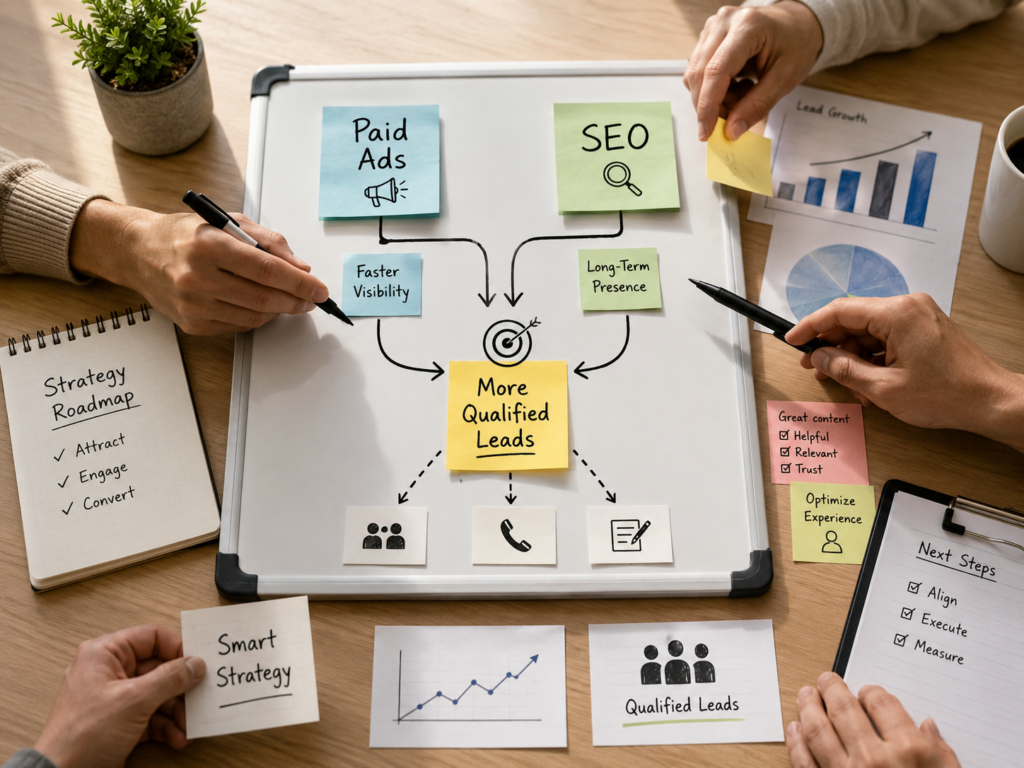
Want Paid Ads and SEO Working Together?
Paid advertising can support faster visibility, while SEO helps build long-term search presence. When both are aligned, your business has a stronger chance of reaching the right customers at the right time.
Paid Ads and SEO Should Work Together
Paid advertising and SEO are often talked about like they are competing strategies.
They should not be.
Paid ads can help a business show up faster for targeted searches. SEO helps build long-term visibility through useful content, optimized service pages, local signals, GBP activity, and stronger website authority. Both can support lead generation in different ways.
Paid ads can help answer questions like:
- Which keywords are driving serious inquiries?
- Which services are getting the most interest?
- Which locations are responding best?
- Which landing pages need improvement?
- Which offers are getting people to act?
SEO can then build on those insights with stronger content and better website structure.
For example, if paid ads show strong interest in a specific service, that may be a sign that the business needs a better service page or supporting blog content around that topic. If a certain location performs well, it may deserve stronger local content or GBP support.
This is how Media Tune looks at lead generation. Paid advertising, SEO, website optimization, and reporting should work together instead of pulling in different directions.
Why Some Paid Ad Campaigns Bring Poor-Quality Leads
Paid ads are not magic.
A campaign can bring poor-quality leads when the setup is too loose, or the strategy is not aligned with the business goal. This is why some businesses feel frustrated with paid advertising. They may be spending money every month, but the leads are not turning into real opportunities.
Common problems include:
- Keywords that are too broad
- Weak or vague ad copy
- Poor location targeting
- No negative keyword strategy
- Sending all traffic to the homepage
- Slow or confusing landing pages
- No call tracking
- No form tracking
- Optimizing for clicks instead of conversions
- Not reviewing the campaign often enough
The issue is not always the ad platform.
Sometimes the campaign is attracting the wrong searchers. Sometimes the page is not built to convert. Sometimes the business is getting leads, but there is no tracking to show which ones are worth the spend.
That is why paid advertising needs regular review. A campaign should be adjusted based on what is actually happening, not just left alone because it is getting impressions and clicks.
How Media Tune Looks at Paid Advertising for Lead Generation
At Media Tune, we look at paid advertising as part of the full customer journey.
The ad is only one piece. Before someone becomes a lead, they see the message, click the ad, land on the website, read the page, decide whether the business feels trustworthy, and choose whether to call or submit a form.
Every step matters.
A stronger paid advertising strategy should start with the business goal. What type of lead does the business actually want? Which services matter most? Which locations should be targeted? What should the visitor do after clicking? How will the campaign be measured?
From there, the campaign should be built around:
- Clear service goals
- Local intent
- Stronger keyword targeting
- Better landing page experience
- Call and form tracking
- Regular performance review
- Practical adjustments based on real data
We do not look at paid advertising as just “running ads.” The goal is to help the business understand where qualified leads are coming from and how the full digital strategy can support better results.
That includes the paid campaign, the website, SEO, GBP visibility, reporting, and the content that supports search visibility over time.
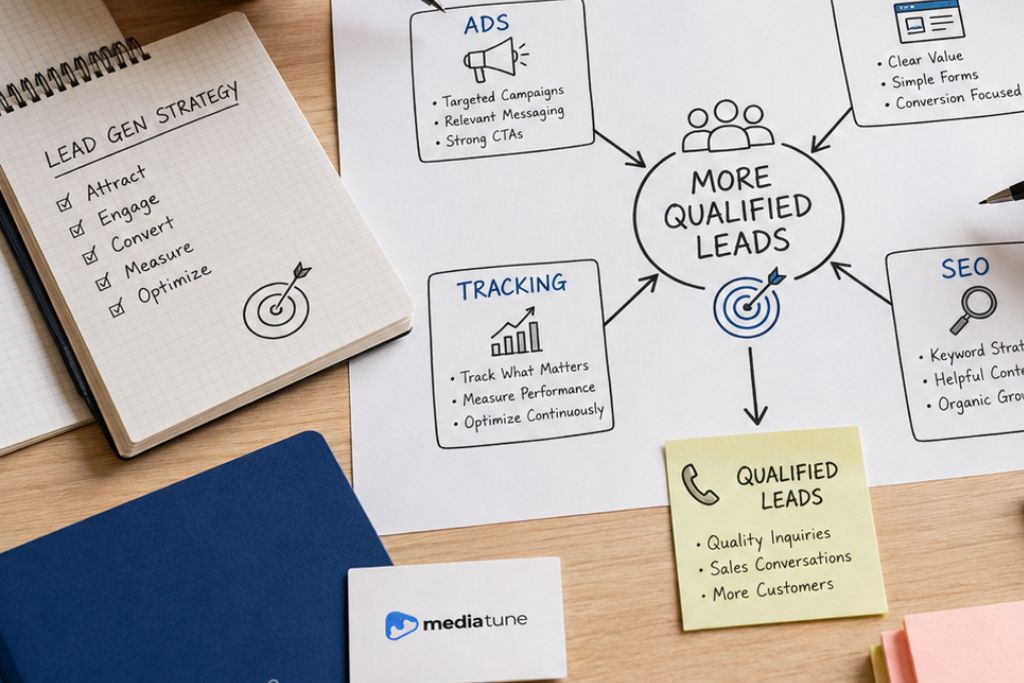
Start Attracting More Qualified Leads
If your business is getting traffic but not enough serious inquiries, the issue may not be visibility alone. Your ads, landing pages, tracking, and SEO strategy may need to work together more clearly.
How Can Paid Advertising Help Businesses Generate More Qualified Leads?
Paid advertising helps businesses generate more qualified leads by reaching people with stronger intent, filtering out poor-fit traffic, sending visitors to focused landing pages, and tracking which campaigns produce real calls, forms, and bookings.
The best campaigns are not built around clicks alone.
They are built around the full path from search to contact.
When the targeting, message, landing page, and tracking work together, paid advertising can help a business attract people who are more likely to become customers. And when those paid insights are connected with SEO and website strategy, the business gets a clearer picture of what is driving real growth.
FAQs About Paid Advertising and Qualified Leads
Paid advertising generates qualified leads by placing a business in front of people who are actively searching for a service, then guiding them to a focused page where they can call, book, or request a quote. The quality of the lead depends on the campaign targeting, ad copy, landing page, and tracking setup.
A lead is qualified when the person fits the business’s target customer profile and is more likely to take action. This may include their location, service need, budget, timeline, and interest level.
Paid ads often bring low-quality leads when keywords are too broad, targeting is too loose, the landing page is weak, or the campaign is optimized for clicks instead of conversions. Poor tracking can also make it hard to see which leads are actually valuable.
In most cases, paid ads perform better when they send traffic to a focused landing page. A homepage can work for general brand searches, but service-specific campaigns usually need a page that matches the ad and gives the visitor a clear next step.
Paid advertising and SEO support lead generation in different ways. Paid ads can create faster visibility for targeted searches, while SEO builds long-term search presence. For many businesses, the strongest strategy uses both together.